Thursday, February 19, 2009

Science Fair Projects

It's Science Fair time again at our girls' school. Last weekend the girls did their projects with a little help from me. Here's what they did. Both projects are from the sciencebuddies.org website.

Archimedes screw pump

I suggested about a dozen different projects to our third grader before we found the one she wanted to do---she wanted to build an Archimedes screw pump. Archimedes originally designed this pump to remove water from a leaking ship. The design is still used in many modern day pumps. The version we built involved wrapping a vinyl tube in the form of a helix around a PVC pipe. As you rotate the PVC pipe, the lower end of the vinyl tube scoops up water. As the pipe continues to rotate, the water moves up toward the upper end by moving down inside the helical tube. It's quite a remarkable invention by Archimedes. Here's a video of our version in action:


Extracting strawberry DNA

Our fifth grader wanted to do a project with DNA. We found a simple project to extract strawberry DNA. You start by smashing some strawberries to pulp and adding a concentrated detergent solution. The detergent pops open the strawberry cells (the technical term for this is lyse), releasing strawberry DNA into the solution. You then separate the solution from the strawberry pulp using cheesecloth, and pour the solution into a test tube (instead of a test tube we used an inexpensive rain gauge that we found at the local hardware store). Finally, you pour chilled rubbing alcohol into the test tube. The alcohol forms a layer above the strawberry solution, and remarkably the DNA precipitates out into the alcohol! Here's a picture of the DNA we extracted:


The white stringy stuff is the DNA that has precipitated into the alcohol. (We didn't have any way to verify that this was indeed DNA---we're just assuming that it must be DNA!)

Saturday, January 24, 2009

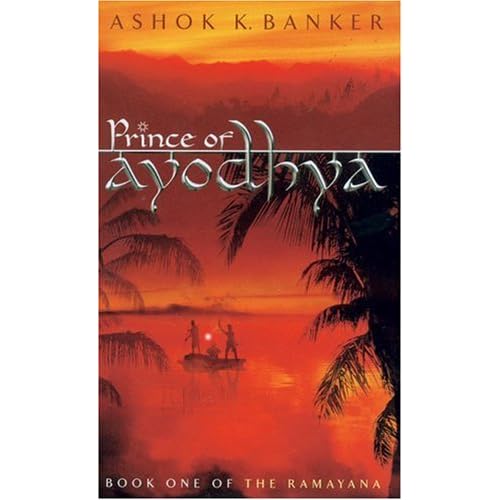
Prince of Ayodhya

Its been a while since my last post, but there's an easy explanation for this hiatus---I found a most incredible series of books to read! And that's been taking up all my spare time, leaving no time to blog.

So what's this series? The surprising answer is that it's the Ramayana! (For those not familiar with the Ramayana, it is one of the two great epics of Hindu mythology, the other great epic being the Mahabharat.) The answer is surprising because, of course, anyone growing up in India has learnt the Ramayana from innumerable sources---from aunts and grandmas, from the celebration of Diwali, from Ram Leelas (popular enactments of the Ramayana), from Amar Chitra Katha, and perhaps even from the Ramayana TV series. So what could possibly be so exciting about this series of books? And what is this series any way?

The series is a collection of 6 books written by Ashok Banker. The first in the series is Prince of Ayodhya. Mala had heard high praise for this series from her niece, and so she brought back a copy of Prince of Ayodhya when she returned from her recent trip to India. I read the first few pages of the book on the very first day she was back, and was instantly hooked! It is like no Ramayana you've encountered before. It is written like a fast paced thriller. Each chapter ends on a cliff-hanger or a mini-climax, making it near impossible to stop reading---you have to start the next chapter to see what's going to happen next. Like all great epics, it is a grand story of good and evil with powerful, heroic, courageous, despicable, and beautiful characters.

And it is told with loving detail. Most tellings of the Ramayana I've encountered focus mainly on describing a series of events. Of course, the main events are the same here. But Banker adds so much more: he develops the characters beautifully (e.g., I hadn't appreciated how evil Ravana really was!), the inter-personal relationships are fascinating, the social and cultural backdrop is described beautifully, and the introduction of various minor characters enhances the richness of the tale. And, above all, it is exciting! If you're a fan of Tolkien's Lord of the Rings, you'll love Banker's Ramayana!

Finally, I have to note that the preface of the book is worth reading. It tells the history of the Ramayana from Valmiki's original, to Ved Vyasa's account as part of the Mahabharat, to Kamban's Tamil retelling, to Sant Tulsidas's Ramcharitramanas, to more recent accounts by Rajagopalachari. The fascinating thing here is that all these accounts purport to tell the same tale and yet they differ even on very basic events. For example, Banker notes:
One instance is the 'seema rekha' believed to have been drawn by Lakshman before leaving Sita in the hut. No mention of this incident exists in the Valmiki Ramayana.
This shocked me---in my mind the 'seema rekha' is a very central plot element in the Ramayana! The point is that for such ancient epics there's no sense in which there's an "official" version. Which means that all you can do is to enjoy each retelling on its own merits. If you take this attitude, rather than constantly wondering if a particular plot element was "really" part of the Ramayana, you'll thoroughly enjoy Banker's version!

Saturday, November 29, 2008

Mumbai Terror Attack

I am still in shock and utterly appalled by the terrible events in Mumbai. I can't imagine how someone can have so much anger, so much hatred, to gun down innocent people in such a pre-meditated and cold blooded manner.

I was first alerted to the unfolding horror late on Wednesday morning (Pacific time) when my sister sent me a short email:

Unprecedented terror in mumbai. Dileep is holed up in Intercontinental hotel but safe. Rest of us are at home.
I immediately switched over to cnn.com to see what this was all about, and was horrified to read about the deadly saga that was unfolding. The areas under attack were exactly the areas I grew up in. We lived between the Taj and the Oberoi, both a short walk from our flat. And my school was close to Cama hospital and Metro cinema. And I've taken umpteen trains from VT station. Worse still, my sister lives right near where we grew up, now very close to this war zone.

My brother-in-law was out for dinner at the Intercontinental, just down the street from the Oberoi. When news of the attacks reached the Intercontinental, the staff immediately closed all entrances to the hotel. Thus no one could enter, but nor could any one leave. So my brother-in-law was stuck in the hotel. He went up to to the terrace of the hotel, and from this vantage point he could see the gun battle unfolding at the Oberoi and the fires burning at the Taj. Fortunately he was able to call my sister and assure her that he was safe. He spent the whole night at the hotel, finally reaching home at 7am.

I spent Wednesday constantly checking various news sources for updates. At about 6pm I was reading the update from the Times of India online edition when I happened upon this chilling line:

The chairman of Hindustan Unilever Harish Manwani and CEO of the company Nitin Paranjpe were among the guests trapped at the Oberoi.
Nitin and I are childhood buddies who grew up together in that very area. In fact, we were scheduled to meet next weekend. And now he was trapped in the Oberoi. I emailed some friends about his situation, but didn't get an update until later that night when my mother confirmed that he had been freed around 4:30am (India time). Apparently once the gunfire started, the staff quickly locked the doors to the room in which they were dining. And by God's grace the terrorists didn't try to enter.

My sister's close friend and mentor was visiting India from Singapore and he was staying at the Oberoi. When the attack started, he barricaded himself into his room and stayed there for the next 36 hours. My sister was constantly in touch with him via his Blackberry. Once again, by God's grace, the terrorists didn't get to him, and he was freed by the commandos once all the terrorists were killed.

I can't imagine the fear that Nitin and my sister's friend and all the others trapped in the hotels must have felt in those terrible hours. And what of the fear and anxiety felt by those close to the trapped people.

In the aftermath of this tragedy, there are more questions than answers. How many terrorists were there? 10 of them have been accounted for, but were there more and what are they up to now? Who really is behind these attacks? Is it the terrorist group Laskhkar-e-Taiba based in Pakistan? Certainly the sophisticated attack suggests significant military training. Was the Pakistani government complicit? Or, at least, did senior members of the Pakistani military or intelligence service unilaterally provide training and support to these terrorists?

And the most important question of all: what now? What should India do in response to these attacks? Certainly beefed up security is important---after all needing to fly in commandos from Delhi suggests a certain laxness that flies in the face of the risks. But does this mean that India, or at least the big cities, need to become police states with military personnel toting semi-automatic weapons visible everywhere you look? That would be a very sad outcome. But what's the right balance?

And what of Pakistan? Outright war with Pakistan would be very unfortunate as it would retard all the great economic progress that India has made. But going after the terrorist training camps in Pakistan seems essential. The best outcome would be if the Pakistan government, perhaps with appropriate pressure from the US government, sees that it is in Pakistan's best interest to help India in putting a stop to these terrorist training camps in Pakistan. Nicholas Kristof of the NY Times has a nice post on this.

I hope that the Indian government shows great strength and resolve in crafting a very effective response to this tragedy of 9/11 proportions.

Sunday, November 9, 2008

Significance of the Election

Much has been written over the last few days about the enormous significance of last Tuesday's election. Of all the pieces I've read, the one I enjoyed the most was a post by Judith Warner in her NY Times blog. In this she notes that despite the enormity of what just happened, it is difficult for our young children to truly appreciate what has been accomplished. She points to this wonderful photograph that ran in the Times that illustrates this beautifully:


In it, a black mother and daughter sit on the floor of a church in Harlem. The mother, Latrice Barnes, having heard of Obama’s victory, is doubled up in tears; her daughter, Jasmine, is reaching a tentative hand up to soothe her. To me, she looks like the future, reaching out to heal the past.
...
For me, this will be the enduring memory of election night 2008: One generation released its grief. The next looked up confusedly, eager to please and yet unable to comprehend just what the tears were about.

Sunday, October 19, 2008

California Propositions

You are all no doubt following the presidential race with avid interest and have already made up your minds as to who you're going to vote for! But you may not have focused yet on the rest of the ballot. If you vote in California, I am referring the bewildering array of propositions that we're going to have to weigh in on---a full dozen state-wide propositions and various local propositions. If you're wondering what to do with these state-wide propositions, this post is here to help. I've looked at the propositions and the recommendations of the LA Times and the SJ Mercury News to put together this post (complete with my recommendations). I'd love to hear your opinion on these recommendations. Also please do vote on Nov 4th---even if you think your vote won't matter in the presidential election, it could well matter for many of these important propositions.

Let's start with a summary of my recommendations:

Vote Yes on propositions 2, 3, 11, and 12. Vote No on all the rest.
(You may want to research proposition 1A a bit more, since that's the vote I'm least confident about. Also, the above are recommendations for the state-wide propositions. For the county and city propositions, I'm leaning toward voting Yes on Santa Clara County propositions A, B, C, and D and a definite Yes on Palo Alto proposition N.)

Now to the details of the propositions and the basis for these recommendations. A couple of guiding principles I used were the following. First, say No to unfunded mandates. It makes absolutely no sense to say that $X billion dollars must be spent on some cause (however wonderful) without saying where the money is going to come from. Second, say No to constitutional amendments unless you truly believe there's a constitutional principle at stake. As Patt Morrison notes in the LA Times, California makes it way too easy to add to its constitution: a simple majority of the voters who show up at the polls suffices. As a result there are almost 500 constitutional amendments, compared to only 27 amendments to the US Constitution. Don't add to this mess. Finally, if you're interested in the back story for each proposition, check out this article.

Here then are my recommendations and recommendations from the LA Times (LAT) and the SJ Mercury (SJM).
  • Proposition 1A: High-speed passenger train. Vote No on 1A.
    LAT: Yes on 1A. SJM: No recommendation yet.
    This is a difficult one. The goal is to build a bullet train connecting SF with LA and later expanding to Sacramento and San Diego. The basic SF-LA line is expected to cost $33 billion, with 75% of it raised from federal and private sources. This bond is to raise almost $10 billion. LAT articulates the promise of this high-tech bullet train: "A high-speed rail line would not only provide a cleaner and faster alternative to automobiles, it would encourage transit-friendly development." On the down side, LAT notes: "If voters approve Proposition 1a, it seems close to a lead-pipe cinch that the California High-Speed Rail Authority will ask for many billions more in the coming decades, and the Legislature will have to scrape up many millions of dollars in operating subsidies."

    I should be excited about the prospect of a bullet train in California. But I fear this is going to be just a sink of money that, at best, will result in a bullet train that won't be used effectively to make a difference. Nothing I've seen of public transportation in California gives me confidence that the government knows how to get it done effectively. I think of San Jose's Light Rail as an example of a pretty ineffective form of public transportation. And so while I would love to be proven wrong, I have to recommend a No vote here. Read the LAT Yes case and make up your own mind.

  • Proposition 2: Prevention of Farm Animal Cruelty. Vote Yes on 2.
    LAT: No on 2. SJM: Yes on 2.
    This proposition is all about the treatment of egg laying hens (pig and veal farming is small in California). Egg laying hens are treated quite inhumanely, being confined to cages the size of a sheet of letter paper. While LAT agrees that this is inhumane, the No argument is that this proposition won't have the intended effect---it will only serve to make California eggs expensive thus driving the industry out of California. The inhumane treatment would then be meted out in neighboring states on in Mexico. SJM responds that the extra cost isn't expected to be that high, that there's plenty of time for farmers to adapt, and that the growing demand for cage-free eggs will give California a competitive advantage in the future. My own feeling is that treating these hens more humanely is the right thing to do, so this proposition deserves your support.

  • Proposition 3: Children's Hospital Bond Act. Vote Yes on 3.
    LAT: Yes on 3. SJM: Yes on 3.
    Authorizes nearly $1 billion dollars in bonds to expand and upgrade California's 8 regional and 5 UC children's hospitals (including Lucille Packard, UCSF, and Oakland Children's here in the Bay Area). This seems like a critical need. As SJM notes: "Children's hospitals throughout the state are overflowing with the seriously ill and injured. ... At Stanford, Lucile Packard Children's Hospital is forced to turn away more than 400 children every year." And LAT notes that Medi-Cal rates are so low that these hospitals can barely pay for operating expenses with nothing left over for capital expenses. This is money well spent.

  • Proposition 4: Waiting period and parental notification before termination of minor's pregnancy. Vote No on 4.
    LAT: No on 4. SJM: No on 4.
    Both LAT and SJM give compelling opinions on why this constitutional amendment is deceptive. For example, SJM says: "From top to bottom, Proposition 4 is the most deceptive measure on the California ballot this fall. It might look like yet another well-meaning but misguided effort - the third in four years - to force minors to notify their parents before seeking an abortion. But this year's version is more insidious. Voters should run to the polls in November to reject it." Read both opinions before you even consider voting yes. Also check out this piece by Francesca Ratner.

  • Proposition 5: Non-violent offender rehabilitation act. Vote No on 5.
    LAT: No on 5. SJM: No on 5.
    On the surface this looks like a proposition worth supporting: non-violent drug addicts using crime to feed their additiction would get rehab instead of jail, thus saving money for jails. But in fact, it's full of loop holes and would unleash complete chaos. The Con case in the voter guide says that "Loophole allows defendants accused of child abuse, domestic violence, vehicular manslaughter and other crimes to effectively escape prosecution" (presumably by saying that "drugs made me do it"). LAT strongly agrees with this: "If it passes, Californians would soon learn that they had swept away the state's few successful diversion programs, inflicted chaos on the parole system, layered on a staggering new bureaucracy and set back the cause of modernizing drug treatment."

  • Proposition 6: Save neighborhoods act. Vote No on 6.
    LAT: No on 6. SJM: No on 6.
    This is one of those unfunded mandates: requires almost $1 billion extra for law enforcement without identifying a source of funds. It also mandates 30 revisions to California's criminal laws (not clear these are needed), adds new bureaucracy, and builds in a provision that amending it requires 75% of the legislature (the recent budget battle only required 2/3rds of the legislature, and we saw how that went). As SJM notes: "Initiatives like this have distorted state priorities and tied up the budget in knots."

  • Proposition 7: Solar and clean energy act. Vote No on 7.
    LAT: No on 7. SJM: No on 7.
    Requires utilities to increase electricity generation from renewable sources. Sounds good, doesn't it? But turns out everyone opposes it: major environmental groups, major utilities, renewable energy providers, consumer groups, taxpayers association, unions, both political parties---they all oppose it! Read the op-eds to see all the things wrong with this proposition. And don't feel that a no vote means less renewable energy. LAT notes: "Under a law passed two years ago, the state is on a path to cut its greenhouse gas emissions to 1990 levels by 2020. There's broad agreement among policy-makers, including Gov. Arnold Schwarzenegger, that in order to reach this goal, the state must get 33% of its power from renewable sources by 2020." So it's going to happen without this proposition.

  • Proposition 8: California marriage protection act. Vote No on 8.
    LAT: No on 8. SJM: No on 8.
    This is a constitutional amendment that eliminates the right of same-sex couples to marry. Do you really want your constitution eliminating rights rather than granting rights? LAT, in its strongly argued piece, says: "We fervently hope that voters, whatever their personal or religious convictions, will shudder at such a step and vote no on Proposition 8." Proposition 22, passed in 2000, also eliminated same-sex marriage, but it was overturned by the California Supreme Court as being unconstitutional (thus the constitutional amendment here). LAT notes that: "Californians have accused the state Supreme Court of obstructing the people's will on marriage before -- in 1948, when it struck down a ban on interracial marriages."

  • Proposition 9: Victims bill of rights act. Vote No on 9.
    LAT: No on 9. SJM: No on 9.
    This is one more of the constitutional amendments that duplicates many rights that victims already have in the law and adds many others. It is a naive attempt to protect victims, but only serves to provide them new and inappropriate roles in prosecution. LAT notes: "The level of punishment a criminal receives should not depend on how persistent a particular family is in pleading for punishment or blocking parole. Civilized justice rejects vendetta and instead places retribution in the hands of the entire society. It may seem depersonalizing, but that's a goal, not a defect, of our system."

  • Proposition 10: Renewable energy and clean alternative fuel act. Vote No on 10.
    LAT: No on 10. SJM: No on 10.
    Authorizes bonds worth $5 billion to fund various clean energy initiatives. But a bulk of this money, some $2.875 billion worth, is reserved for alternative fuel vehicles with most of it going to vehicles using natural gas rather than for things like plug-in hybrids. That's not surprising since this proposition is sponsored by Texas billionaire T. Boone Pickens who co-founded Clean Energy Fuels Corp. that operates natural gas filling stations. There are lots of other problems with this proposition (see LAT and SJM for details). A much better way to get to the goal of more clean energy is to mandate vehicle pollution limits (which the Bush adminstration prevented California from enacting).

  • Proposition 11: Redistricting constitutional amendment and statute. Vote Yes on 11.
    LAT: Yes on 11. SJM: Yes on 11.
    Here's a constitutional amendment that is worth supporting, and it does feel like a constitutional issue. It puts the power of redistricting for state elections (though not Congress) in the hands of a 14 member commission rather than in the hands of the State Legislature. In the current situation, LAT observes that: "Voters are supposed to choose their representatives, but in California, political parties select their voters." SJM notes that: "Proposition 11 would deny incumbents the ability to use redistricting to their advantage. ... Legislators put self-interest first when they control redistricting. Minorities and everyone else will benefit from taking that power out of their hands."

    This is a case where I've changed my mind! In a past election I recommended voting against a similar proposition. This was at the height of the Bush era when Texas was using redistricting to cement Republican control, and I didn't want the Democratic party to be at an unfair disadvantage in California. This view was perhaps short-sighted, and LAT addresses it squarely: "By the same token, it would be foolish for Democrats to oppose the measure out of a belief that it would cost their party its majority in Sacramento. It won't. For every district it puts in play that currently elects Democrats, it is just as likely to put in play a district that currently elects Republicans. It would simply ensure that legislative Democrats (and Republicans) would heed voters and not just party bosses."

  • Proposition 12: California veterans bond. Vote Yes on 12.
    LAT: Yes on 12. SJM: Yes on 12.
    This is the most straightforward Yes vote. It provides a $900 million bond for farm and home aid for California veterans. The aid is in the form of loans to veterans, so historically it has not cost the state anything. Californians have approved this 26 times before, and there's no reason why we shouldn't support our veterans again this time. And what ever you may think about the war in Iraq, supporting veterans is a no-brainer.

Sunday, September 14, 2008

Vipassana Meditation

Vipassana is a meditation technique originally taught by the Buddha. It is meant to promote peace and harmony in ones life and eliminate the agitation, irritation, and disharmony one often experiences. The link above provides a summary of the principles underlying the technique. These principles are discussed at greater length in the book The Art of Living (note: this is unrelated to the Art of Living courses one hears about). The technique itself is taught in a completely free 10 day course held at various locations around the world (see the Vipassana site for details of a course near you).

I was introduced to Vipassana by my father. He has been practicing Vipassana for over 15 years now. My father is the most spiritual person I know---not religious in a traditional sense, but rather someone who was always searching for the higher truth. He says that of all the things he's learnt, Vipassana has been by far the most beneficial. This is high praise indeed.

I've read The Art of Living and have heard a series of lectures by S. N. Goenka, the person who has been instrumental in spreading Vipassana in India and around the world. From everything I've read and heard, the technique sounds very compelling. There's no hocus-pocus. It's a very concrete technique, with very concrete reasons for why it works. I'm not going to try to distill the essence of the technique here; for that I refer you to the above sources for an authoritative and comprehensive treatment (but I'm happy to talk to you about my understanding if you're interested).

An important point, emphasized by Goenka, is that reading books or listening to lectures is no substitute for actually practicing Vipassana. A good friend of mine, Raj, recently had the good fortune of actually attending a Vipassana course. Here's what he writes about his experience:

Just got back from Vipassana. 11 days of living like a monk in silent meditation. It is wilderness survival training for your mind. Training your mind to survive on its own and manage your anxieties, fears and other strong emotions without the support of conversation, reading, television or any contact with the outside world. You learn how to control your subconscious mind to recognize and control your cravings, desires and attachments. It is frightening to realize the depth and strength of the roots of your cravings. As you try to teach your subconscious mind to be equanimous to cravings, these deep rooted desires literally surface in waves that get amplified as they bounce around in your head without any of the usual distractions to dampen their intensity. Your mind feels like it is going to snap, much like the suspension bridge bearing the army garrison that did not break file. The first few nights I literally woke up sweating in my eight by eight cell surrounded by the ghosts of physical manifestations of my cravings swimming around me in the darkness. It starts getting better after about the fourth day.

That sounds like a pretty intense experience! (And, yes, he's a rather good writer!) I've been wanting to do the course for some time now. I almost attended a course back in 2004, but a minor emergency at the last minute intervened and I chose not to attend. Now, almost 4 years later, I'm finally getting around to fixing this omission : I'll be attending a course starting next week (assuming, of course, there are no emergencies this time!).

Friday, September 12, 2008

Google's Search UI

I wanted to make a note of a couple more Google blog posts that point at some more cool technology. No, I'm not talking about Chrome or the Chrome comic book. Rather, I'm referring to two recent posts by Ben Gomes. In the first post, Ben talks about the principles that guide the design and evolution of the Google search user interface. Of course, any talk of the evolution of the search interface raises a natural question:

A common reaction from friends when I say that I now work on Google's search user interface is "What do you do? It never changes." Then they look at me suspiciously and tell me not to mess with a good thing. Google is fine just the way it is -- a plain, fast, simple web page. That's great, but how hard can that be?"

Turns out it's not as easy as it may seem. Ben discusses a number of principles that guide UI development and provides several examples of the principles in action. One of the most interesting points he makes is related to the goal of search:

...to get you to the web pages you want as quickly as possible. ... This goal may seem obvious, but it makes a search engine radically different from most other sites on the web, which measure their success by how long their users stay. We measure our web search success partly by how quickly you leave (happily, we hope!).

A key part of UI development is experimentation on live traffic. In his second post, Ben describes a series of UI experiments ranging from big, prominent changes to tiny, subtle ones.

... we test almost everything, even things that you would think are so small that we could not possibly care (nor could they possibly matter). In fact, small changes do matter, and we do care.

Check out these posts for a glimpse of the care with which the Google search UI is designed.
/* Google Analytics tracking */